 Anir Suren
You've probably seen the cards going around: a clean black-on-white report with someone's face on it, scores for jawline and symmetry, and one big number out of 10. People can't stop posting their results. It's all coming from one trick, where you hand ChatGPT a selfie and the right prompt, and it writes you a full facial aesthetics report in seconds.
Here's the whole thing: how to run it, the exact prompt to paste, and how to actually read what it gives you back. The prompt is right below, copy it word for word.
How to run it
It takes about a minute and works on the free version too, since the newer image understanding is built in.
- Open ChatGPT and start a new chat.
- Upload one clear, front-facing selfie. Look straight at the camera, decent lighting, no heavy filter, hair off your face. The better the photo, the more useful the read.
- Paste the prompt below right under the photo and send it.
- In a few seconds it builds the report: scores per feature, one overall number, and a list of fixes.
The exact prompt
This is the full prompt, nothing held back. Hit copy and paste it in with your photo.
Create a clean, minimal, high-end facial aesthetics report based on the uploaded photo, using a black-on-white editorial design with thin linework, rounded cards, generous spacing, modern typography, and a refined luxury feel. Include an isolated front-facing image of the face, presented as an analytical attractiveness-assessment diagram. Provide an honest, objective evaluation of facial attractiveness potential, avoiding excessive flattery and focusing on symmetry, facial thirds, overall proportions, eye spacing and shape, nose harmony, lip proportion, jawline, chin, cheekbone structure, skin texture and tone, hairline, hairstyle, grooming, overall facial harmony, and photogenic potential.

Assign clear, realistic scores to each major category, along with one overall attractiveness-potential score, keeping the ratings grounded, useful, and not artificially inflated. Include practical, achievable recommendations to improve attractiveness potential, covering grooming, haircut, facial hair, skincare, eyebrow shaping, posture, weight loss, minor aesthetic procedures, styling, and photo presentation. Maintain a refined, direct, constructive tone that's easy to understand, with actionable next steps that build on the subject's strengths.
What it actually looks like
Here are two real reports the prompt generated from public photos, so you can see the layout before you run your own. Same template, honest scores, full breakdown.
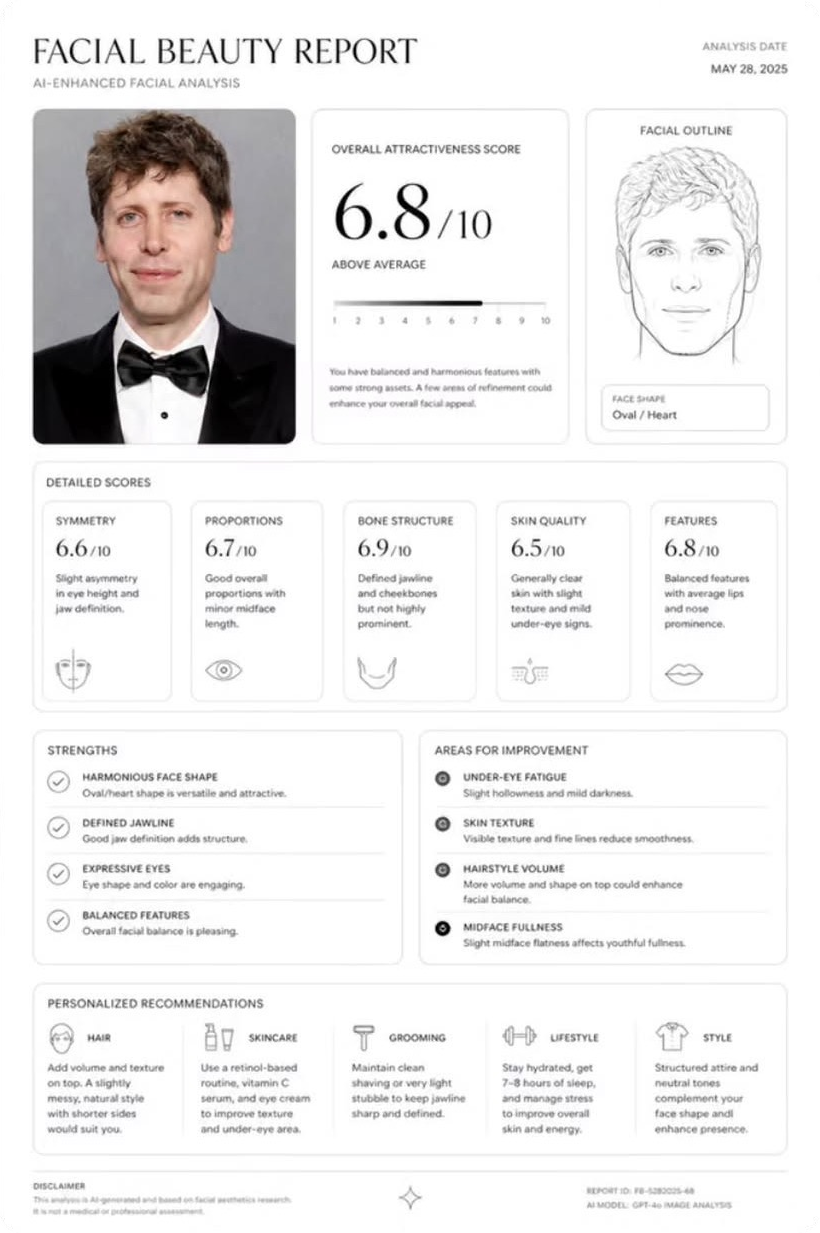
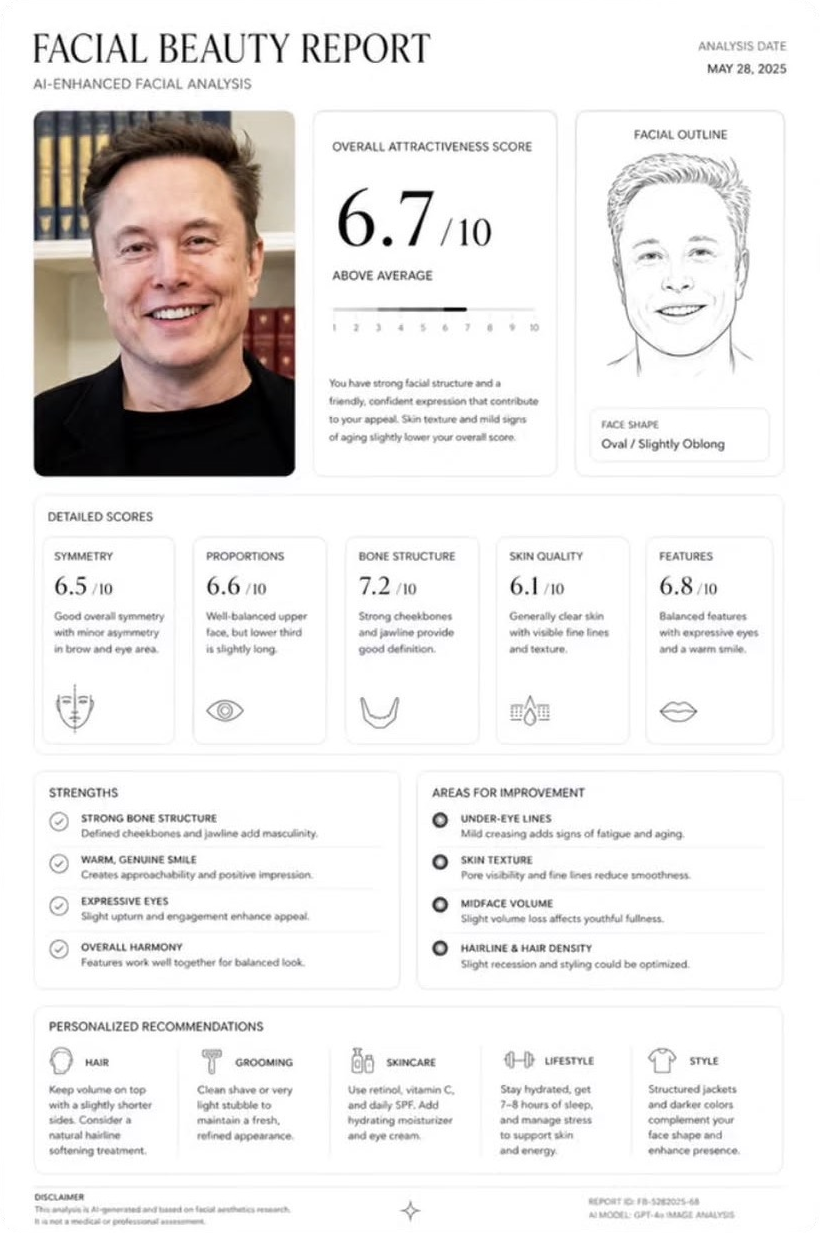
Two real reports from the exact prompt above.
What the report gives you
The output is the fun part. You get a card that looks like something a clinic would hand you, broken into a few pieces:
- Feature scores. Separate ratings for symmetry, facial thirds, eyes, nose, lips, jawline, chin, cheekbones, skin, and hairline, so you can see exactly where you score high and where you don't.
- One overall number out of 10. The headline score people screenshot. Because the prompt tells it to stay grounded and skip the flattery, it tends to land somewhere honest instead of handing everyone a 9.
- Fixes you can actually do. This is the genuinely useful bit. Haircut, facial hair, brows, skincare, posture, styling, and how to shoot a better photo. Small changes that move the number more than you'd think.
The score is the hook, but the recommendations are the real value. Most of what moves your number is grooming, styling, and a better photo, not your bone structure.
A few things worth knowing
Keep it in perspective. This is a model reading pixels and proportions, not a verdict on you. Run two different photos and the score can shift, which tells you how much lighting and angle drive the whole thing. If anything, that's the useful lesson: a sharper haircut and a well-lit, straight-on photo will do more for how you come across than almost anything else.
One more note. It only reads what's in the frame, so a clean, well-lit shot gets you a far more honest read than a dim mirror selfie. Treat the low scores as a to-do list, not an insult, and the high ones as the stuff to lean into.
Run it, screenshot your card, and go fix the easy stuff first.
– Anir
If this is the kind of AI thinking you want working on your own business, apply to work with me. And to catch the next breakdown, join the newsletter.