 Anir Suren
On June 26, 2026, OpenAI dropped GPT-5.6, and the AI world stopped scrolling. It isn't one model. It's three, named Sol, Terra, and Luna. And on the coding test everyone uses to rank these things, Sol just edged out Claude's best model, the one people had been calling the smartest AI on earth.
There's a lot packed into this release, and most coverage either oversimplifies it or buries you in jargon. So here's the whole thing, start to finish, in plain English: what each model is, how good it actually is, the new "ultra mode," what it costs, the safety story, and the genuinely strange reason you can't use it yet.
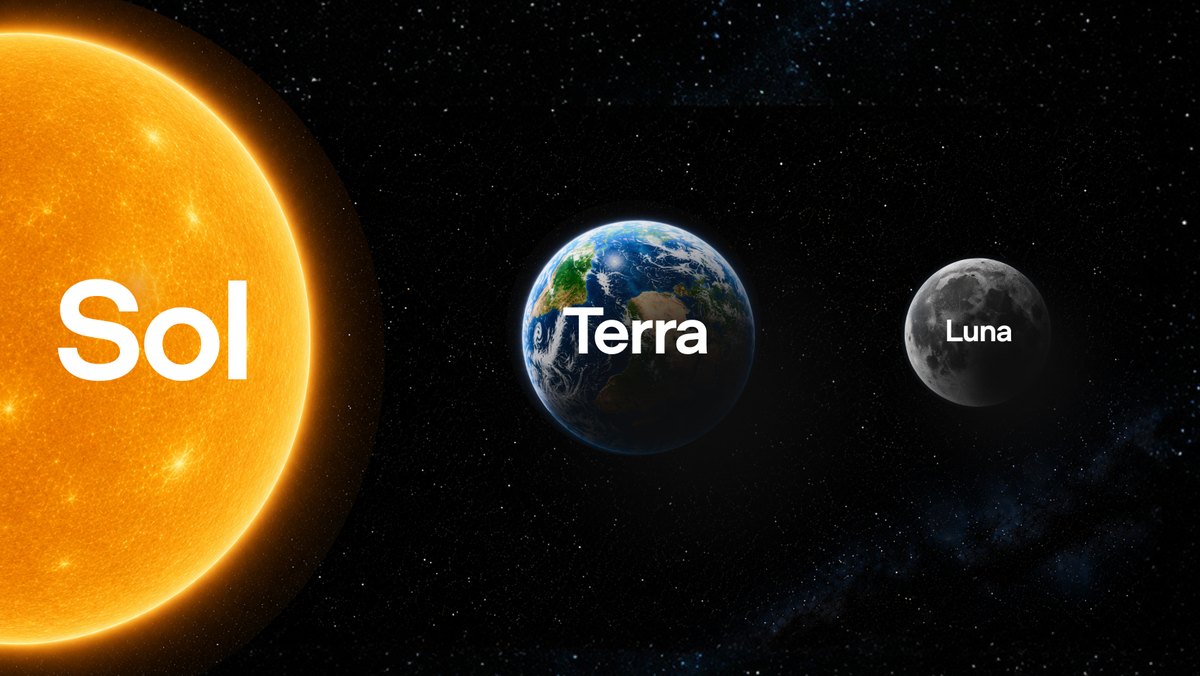
First, the new naming makes sense now
OpenAI's model names have been a mess for years (think GPT-4, 4o, 4.1, o1, o3). With GPT-5.6 they fixed it. From now on, the number tells you the generation (5.6), and the name tells you the tier:
- Sol (the sun) is the most powerful.
- Terra (the earth) is the balanced middle.
- Luna (the moon) is the fast, light one.
The clever part is those names stick around. The next generation will still have a Sol, a Terra, and a Luna, so you'll always know which tier you're getting without memorizing a new alphabet soup. It's the same idea as a car lineup: the trim level means the same thing year to year.
The three models, in plain English
Here's who each one is actually for.
Sol · the flagship. The strongest model OpenAI has ever shipped. It's built for hard, multi-step "agentic" work, the kind of task where the AI has to plan, use tools, check its own work, and keep going for a long time. Coding, deep research, complex analysis. If a job is genuinely difficult, this is the one you reach for. It's also the record-breaker on the benchmarks below.
Terra · the everyday workhorse. Roughly the same quality as last generation's full model (GPT-5.5), but 2x cheaper. This is the one most people and businesses will actually run all day: drafting, summarizing, answering, normal work. Smart enough for almost everything, priced so you don't think twice.
Luna · the fast and cheap one. OpenAI's lowest-cost model, tuned for speed and volume. When you need to process thousands of things quickly (tagging, sorting, simple replies, high-traffic apps), Luna does it for pennies. Less raw brainpower, but blazing fast and almost free at scale.
Which should you use? Simple rule: Luna for high-volume simple stuff, Terra for your normal everyday work, and Sol when the task is hard enough that you'd want the smartest thing in the room. Most people will live in Terra and call in Sol for the heavy lifting.
Illustrative, based on OpenAI's positioning of each tier. Higher is better.
What it costs
AI is priced per "token" (think of a token as roughly three-quarters of a word). Prices below are per one million tokens in and out, which is a lot of text, hundreds of thousands of words.
The headline here is Terra being half the price of the old flagship for similar quality, and Luna being cheap enough to throw at huge jobs. OpenAI also made "prompt caching" more predictable (if you reuse the same context a lot, you get a 90% discount on the repeated part), which quietly makes building real apps on these models a lot cheaper.
The big one: it beat Claude on coding
This is the chart that set everyone off. Terminal-Bench 2.1 tests real command-line coding work, the messy, multi-step stuff an actual developer does (planning, running commands, fixing what breaks). GPT-5.6 Sol scored 88.8%, and with ultra mode on (more on that next), 91.9%, both clearing Claude Mythos 5 at 88.0%, the model that had been sitting at the top.
Data: OpenAI, Terminal-Bench 2.1 (June 2026). Blue = OpenAI models.
The gaps at the very top are small, and benchmarks aren't everything. But the symbolism is huge: for the first time in a while, OpenAI is in first place on the test developers care about most, ahead of Claude Mythos 5, Claude Fable 5, Claude Opus 4.8, and Gemini 3.1 Pro.
The other scores (and what they actually mean)
OpenAI also showed off two more areas, and the interesting story in both is efficiency, not just raw score:
- Biology (GeneBench). On long, complicated genetics and biology analysis, Sol beats last generation's model while using fewer tokens. Translation: it's smarter and cheaper to run on hard science work.
- Cybersecurity (ExploitBench). On security tasks like finding software vulnerabilities, Sol matches the top rival model (Mythos) while using only about one third of the output. Same answer, a third of the work. That efficiency is a big deal at scale, and it's also exactly why OpenAI got nervous, which we'll get to.
The pattern across all of it: GPT-5.6 isn't just a little smarter, it gets to the answer with a lot less effort. Cheaper and faster for the same result is often more important than a couple of extra benchmark points.
The new trick: "ultra mode"
GPT-5.6 adds two new dials to Sol. The first is a max reasoning effort setting, which just lets it think for much longer on genuinely hard problems before answering.
The second is the headline feature: ultra mode. Normally one AI works on your task alone. Ultra mode instead spins up several sub-agents, smaller copies that each take a different piece of the problem, work in parallel, and then combine their results into one answer. That's why "Sol Ultra" beats plain Sol on the chart above. It isn't a smarter model, it's several of them working as a team. Think of it as going from one expert to a small crew that splits the work and finishes faster.

The safety story (and why it's a big deal here)
Here's the part that makes this release unusual. Because GPT-5.6 is so capable, especially at cybersecurity, OpenAI shipped it with what they call their strongest safety stack ever, and they're being unusually careful about who gets it.
In plain terms, they built layers of guardrails: the model is trained to refuse clearly harmful requests, a second system watches the output as it's being written and can pause it for review, and there's account-level monitoring for repeated abuse. They also threw enormous resources at testing it, over 700,000 GPU-hours of automated "red-teaming," where they use their own AI to attack the model and find weaknesses before bad actors do.
OpenAI is careful to say Sol is much better at helping people find and fix security holes than at carrying out full attacks, and that it stays under their internal "critical" risk line. But they admit a model this capable, combined with other tools, is genuinely powerful, which is the whole reason for the unusual rollout below.
The catch: you can't actually use it yet
This is what made the launch go viral. GPT-5.6 is a limited preview. Right now it's only available through the API and Codex to a small group of trusted partners, not in the normal ChatGPT app that everyone uses.
Why? Because the US government got involved. OpenAI says that as part of its ongoing engagement with the government, it previewed the models and their capabilities ahead of launch, and at the government's request, it's starting with this narrow preview before releasing more broadly, while they work out a repeatable framework (tied to a cyber Executive Order) for future powerful releases. OpenAI openly says it doesn't think this kind of government sign-off should become the permanent norm, since it keeps the best tools from people who need them, but it's doing it as the fastest path to a wide release "in the coming weeks."

Read that again: a company built a piece of software so capable that the government asked them to slow down the public release. Whatever you think about that, it tells you exactly how far these things have come.
A couple more things worth knowing
- It's going to be fast. OpenAI is putting Sol on specialized Cerebras chips at up to 750 tokens per second in July. That's very fast, fast enough that watching it work feels close to instant.
- Broad access is coming. OpenAI says all three models will roll out across ChatGPT, Codex, and the API "soon," likely within weeks.
- The race just flipped. Claude had been the consensus best model for serious work. GPT-5.6 Sol taking the top coding spot, even narrowly, restarts the back-and-forth at the very top.
The bottom line
OpenAI shipped three models that finally make sense as a lineup, took back the number-one spot on coding from Claude, added a mode where multiple AIs work as a team, and made the whole thing cheaper to run. The only reason it's not already in your ChatGPT is that it's powerful enough for the US government to ask them to wait. That single fact is the real story: the frontier is now moving fast enough that "should we even release this yet" is a serious question.
When it opens up to everyone, you'll want to grab Sol for the hard stuff, run Terra for everyday work, and use Luna anywhere speed and cost matter more than raw power. I'll send the moment it goes public.
This stuff moves fast. If you want the next big drop explained in plain English the day it happens, that's exactly what the newsletter is for.
– Anir
Want this kind of AI thinking working on your own business? Apply to work with me. And to catch the next breakdown first, join the newsletter.